
Capitol Hill Challenge™
A national financial education competition that reaches every U.S. Congressional district. Student teams manage a hypothetical $100,000 portfolio, learn how markets and policy connect, and meet the Members of Congress who represent them.
Civics and investing in one competition
Each year, with the full participation of Congress, the Capitol Hill Challenge invites thousands of public school students nationwide to take part in a fun, educational online competition that builds a deeper understanding of personal finance and economics.
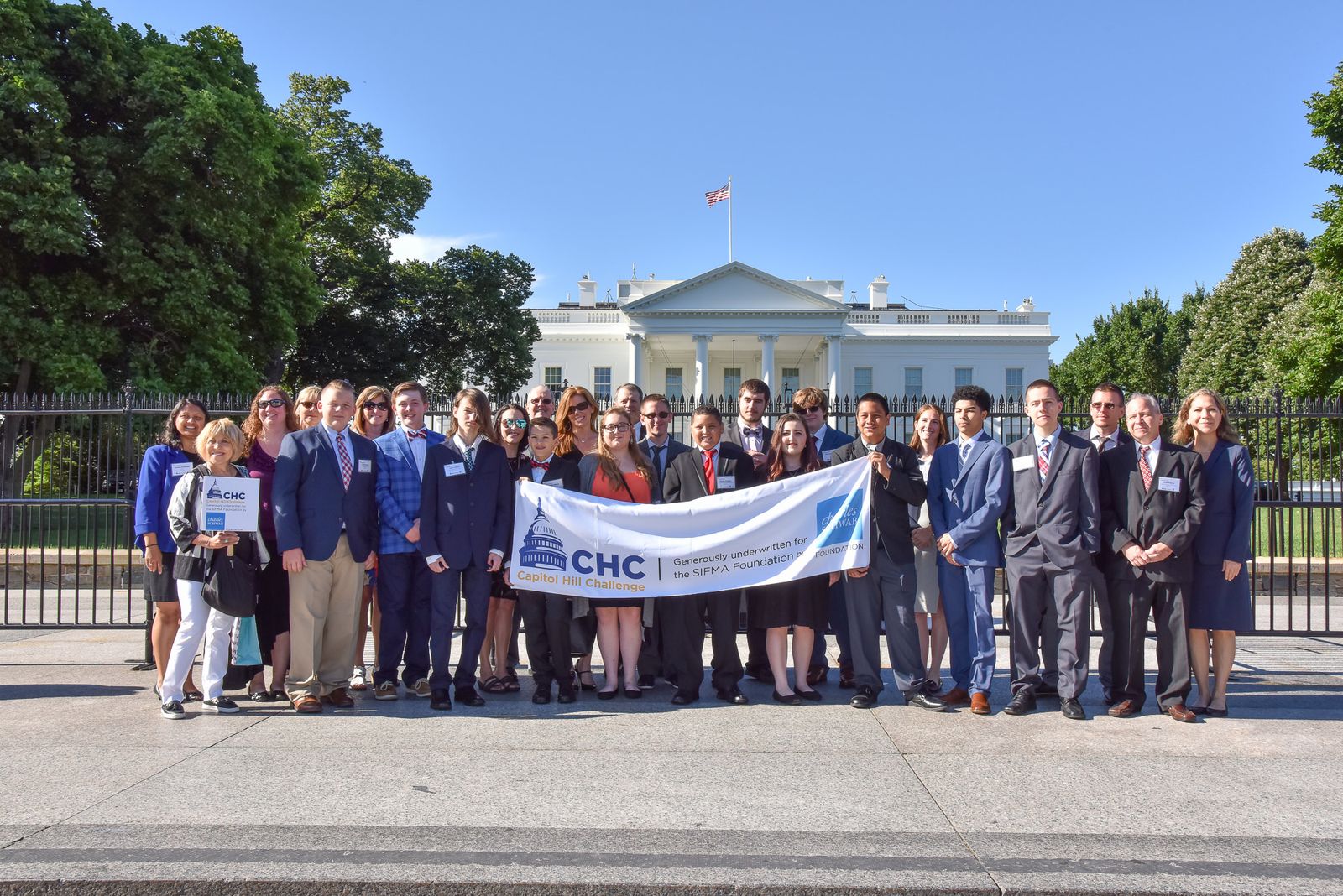
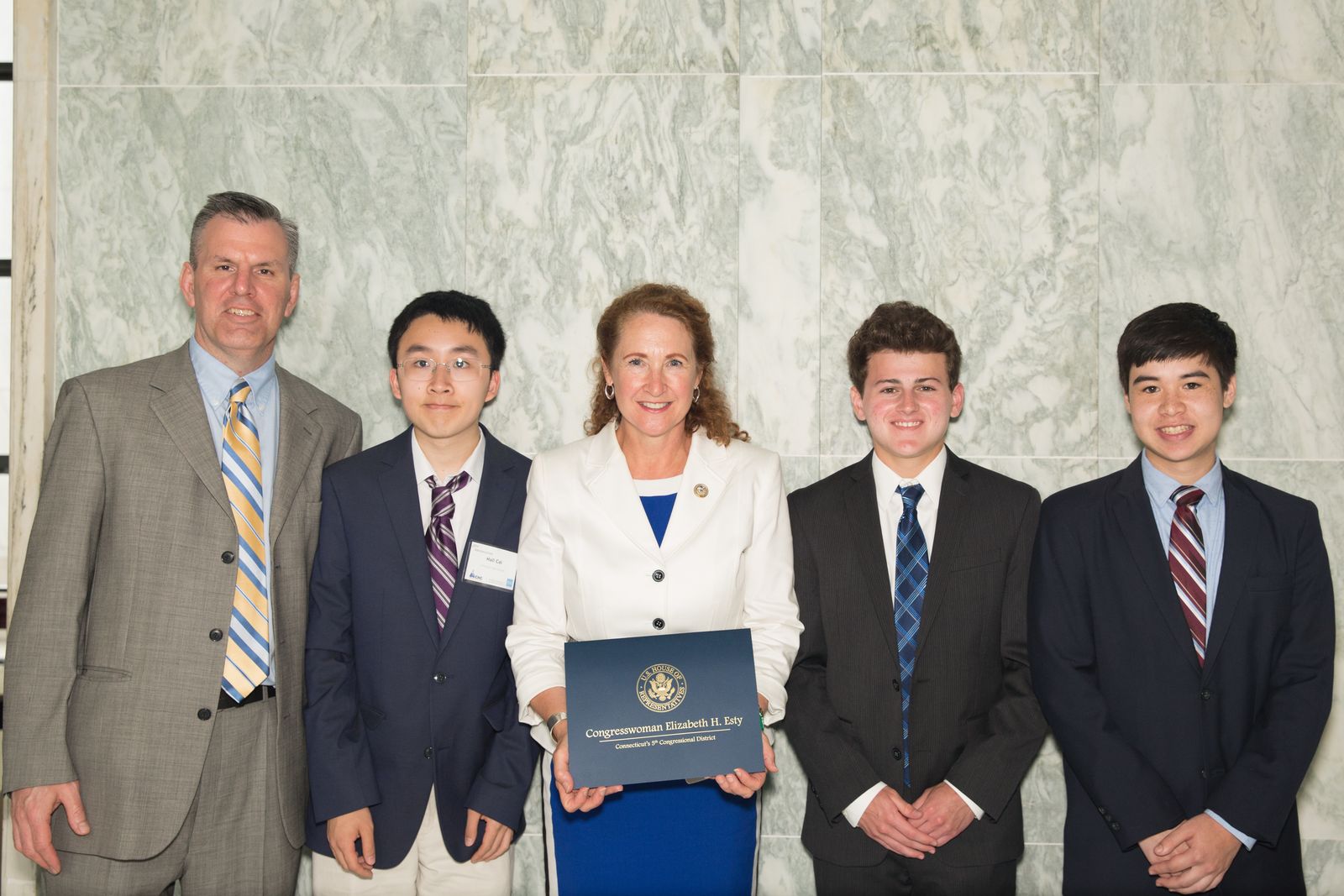
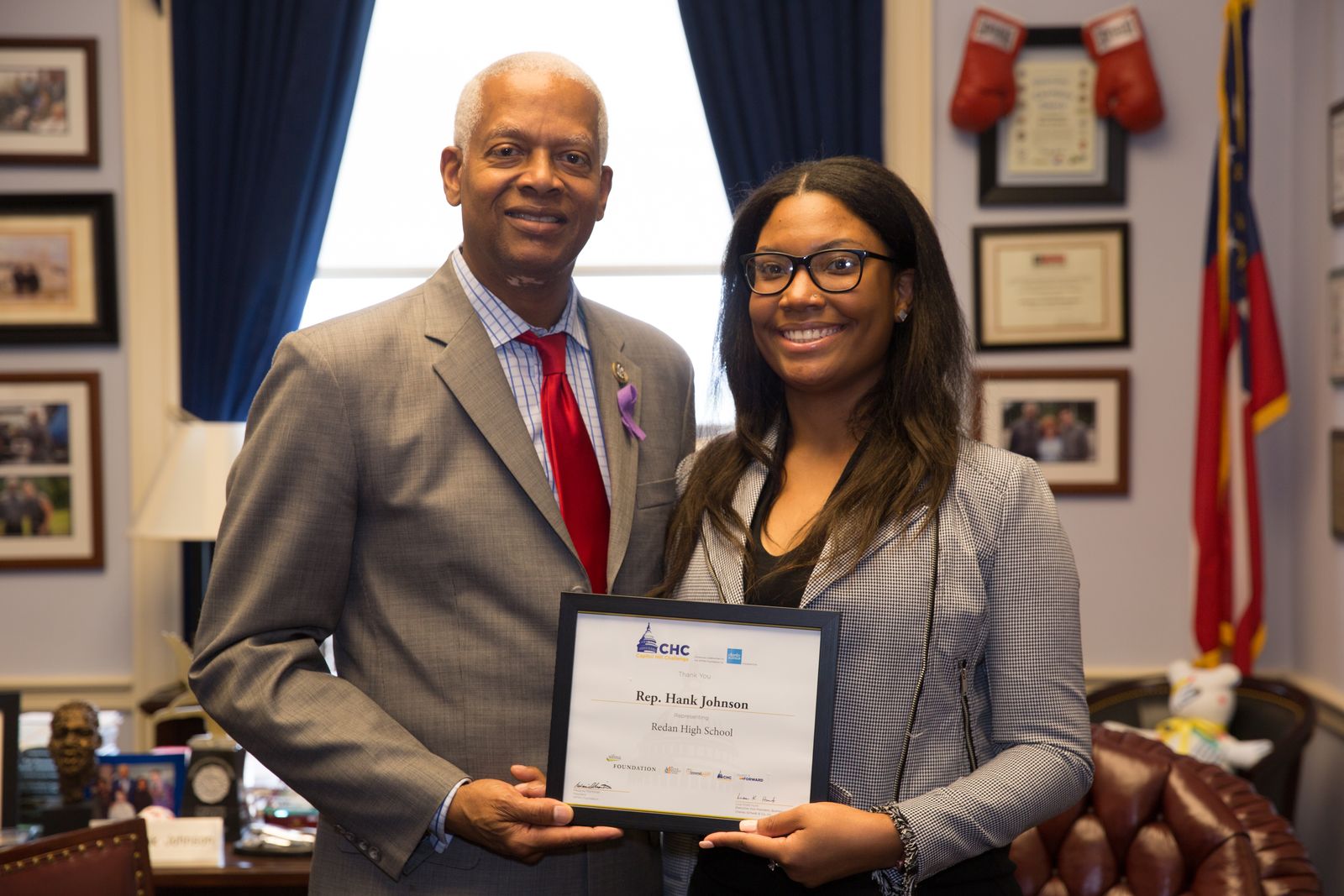
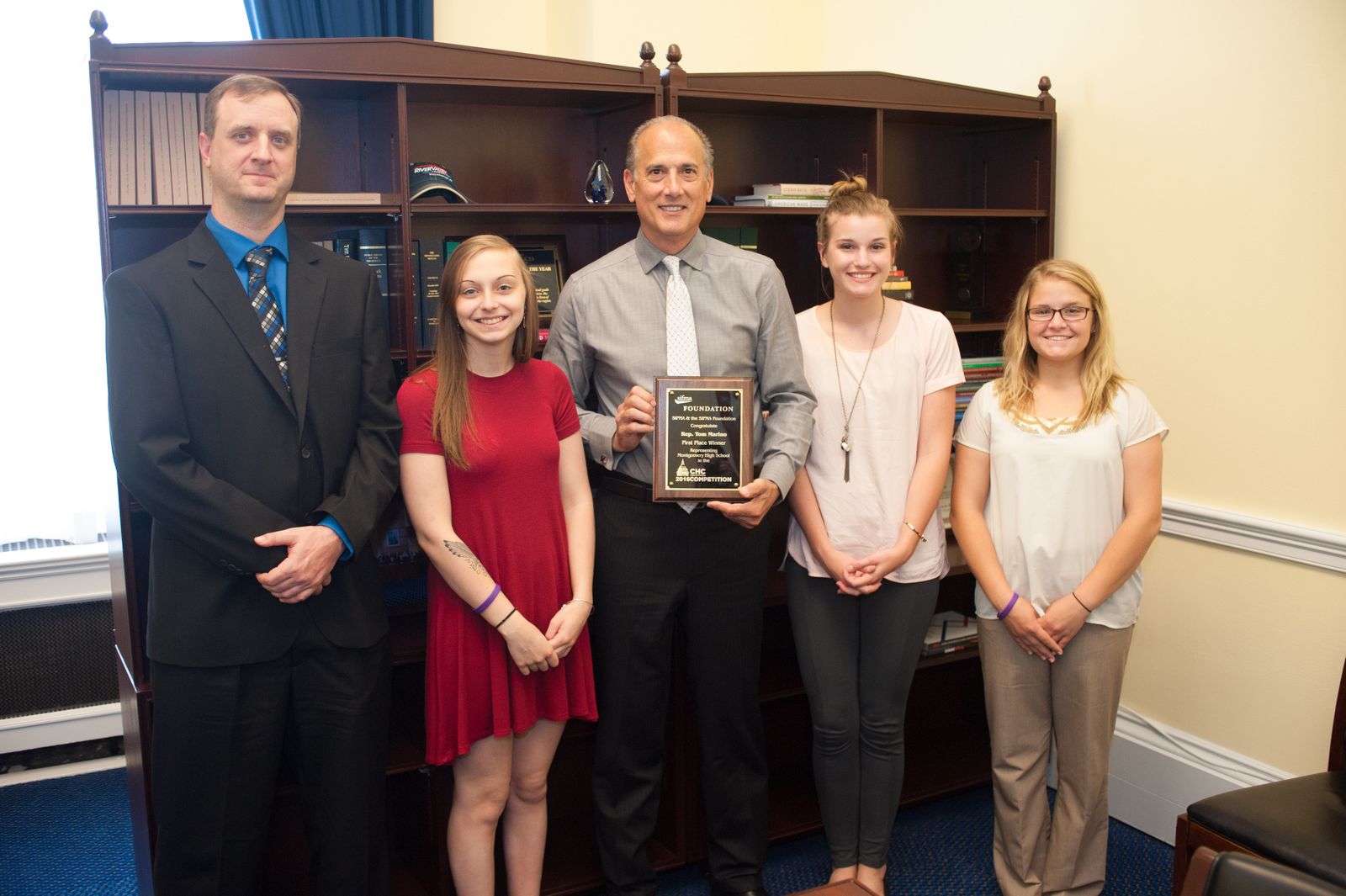
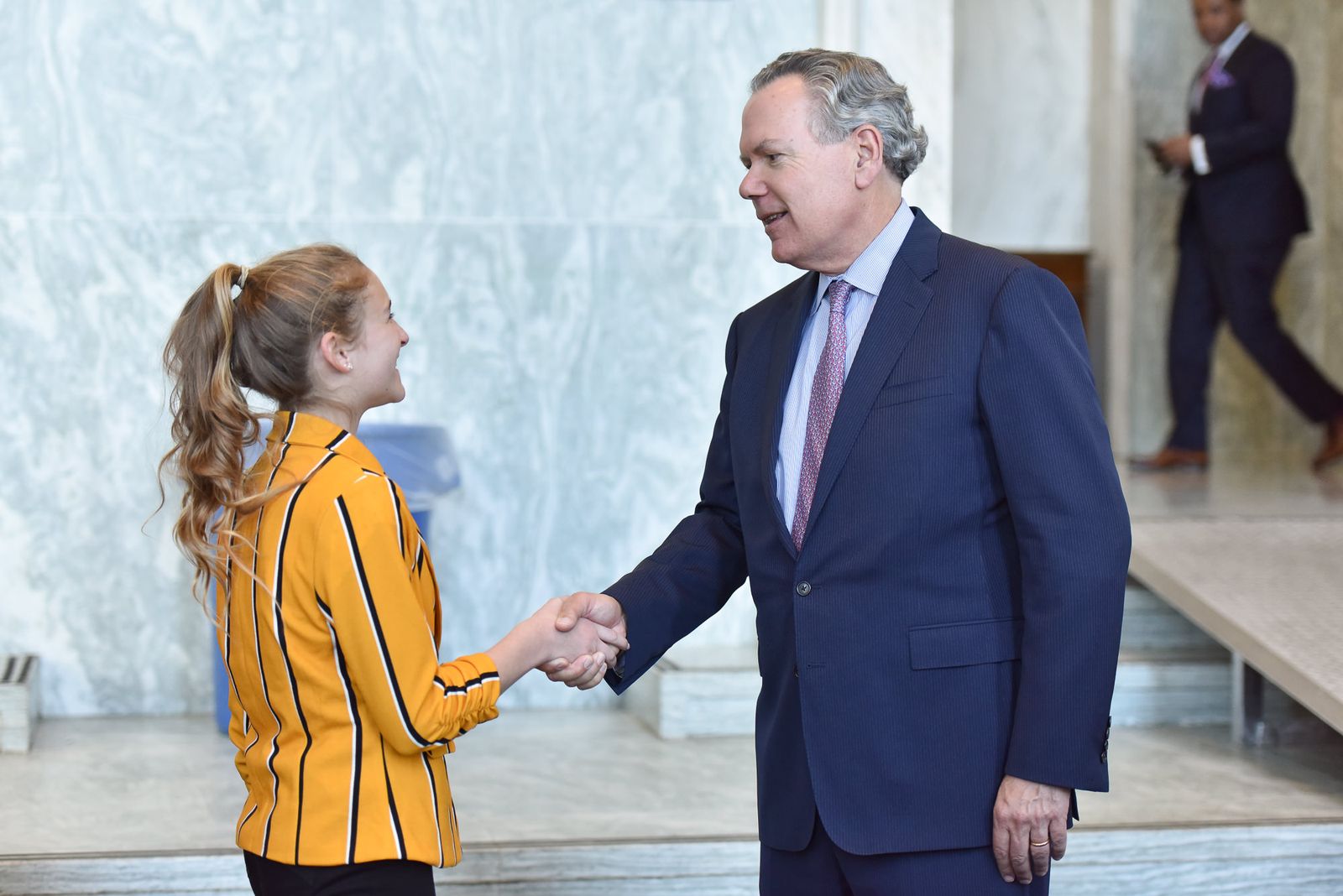
Now in its third decade, the program is distinguished by its model: every Member of Congress is paired with up to two public schools in their district. Beyond financial knowledge, it promotes mentorship, civic engagement and community connection.
Since launching in 2004, the Capitol Hill Challenge has made more than 8,500 matches of U.S. Senators and Representatives with schools, reaching nearly 180,000 students in all 50 states, Guam, Puerto Rico and the District of Columbia.
Built for schools that need it most
The Capitol Hill Challenge is offered free of charge and only by invitation from the SIFMA Foundation. Schools are matched with their Member of Congress by zip code.
- Priority goes to Title I public middle and high schools demonstrating the highest need, as measured by federal programs such as Free and Reduced Meals
- Up to two public schools per Member of Congress
- Up to 15 student teams per school, with 3–5 students per team
- A teacher or senior administrator at the school acts as team advisor
- Students in a separate Stock Market Game session can also join one CHC team
Portfolio rules in brief
A summary of the 2027 Rules and Code of Participation. Read the full document before the season starts.
$100,000 in cash
No margin. Trade stocks and mutual funds listed on NASDAQ and NYSE, plus a pre-set group of investment-grade bonds.
No shorts, no penny stocks
No short-selling, inverse or leveraged ETFs, and no buys at or below $5 a share or $100 million market cap.
20% cap per security
At least $10,000 in each asset class by April 2, held to the end, and no more than 20% of equity in one security.
From invitation to the Capitol
Invitation
The SIFMA Foundation invites eligible public schools and matches each one with its Member of Congress.
Build a team
Advisors register up to 15 teams of 3–5 students and submit team rosters by the deadline.
Trade for 14 weeks
Teams manage a hypothetical $100,000 portfolio of stocks, bonds and mutual funds on The Stock Market Game platform.
Celebrate
The 10 top-ranked teams receive awards and national recognition at a June celebration with Members of Congress.
The season at a glance
Trading begins
Portfolios open at 9:30 am ET.
Roster deadline
Advisors submit student team rosters by 5 pm ET.
Diversification deadline
At least $10,000 in each of stocks, bonds and mutual funds.
Trading ends
Winners are ranked by percent return compared with the S&P 500 Growth. Celebration in June.
Source: stockmarketgame.org CHC page and SIFMA press release of May 20, 2026. To be confirmed by SIFMA.
2026 Top 10 schools
Announced May 20, 2026. The ten highest-performing teams were honored at a June 10 reception at the U.S. Capitol.
| Rank | School | City, state | Member of Congress |
|---|---|---|---|
| 1 | Buena Vista High School | Omaha, NE | Rep. Don Bacon |
| 2 | Red Bank Charter School | Red Bank, NJ | Rep. Frank Pallone Jr. |
| 3 | Laona High School | Laona, WI | Rep. Thomas Tiffany |
| 4 | Discovery High School | Lawrenceville, GA | The late Rep. David Scott |
| 5 | Normandy High School | Parma, OH | Rep. Max Miller |
| 6 | Tennyson High School | Hayward, CA | CA-14 |
| 7 | Chicago High School for Agricultural Sciences | Chicago, IL | Rep. Jonathan Jackson |
| 8 | Indiana Math & Science Academy | Indianapolis, IN | Rep. André Carson |
| 9 | South Umpqua High School | Myrtle Creek, OR | Rep. Cliff Bentz |
| 10 | William P. Jarrett Middle School | Honolulu, HI | Rep. Ed Case |
What leaders and participants say
“The Capitol Hill Challenge demonstrates what is possible when educators, policymakers, and the private sector work together to expand access to financial education.”
Melanie MortimerPresident, SIFMA Foundation“Too many young people reach adulthood without the tools or confidence to make informed financial decisions. Programs like the Capitol Hill Challenge help close that gap.”
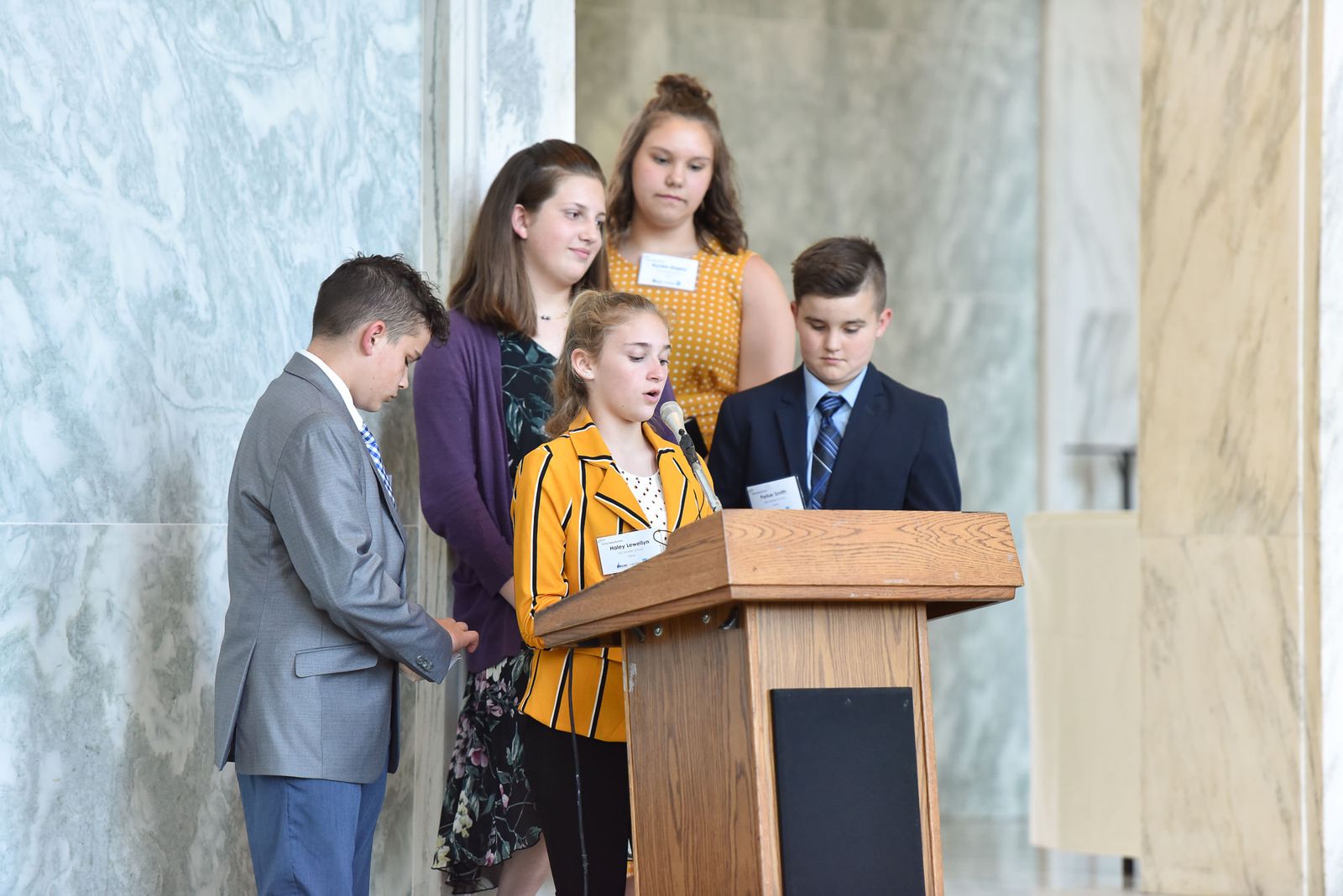
Lisa HuntDirector, Charles Schwab Foundation; Vice Chair, SIFMA Foundation Board“I watched trends over time and made choices I thought were best. Buy the dips and sell the hills.”
Aven BangeStudent, Fayette High School, Missouri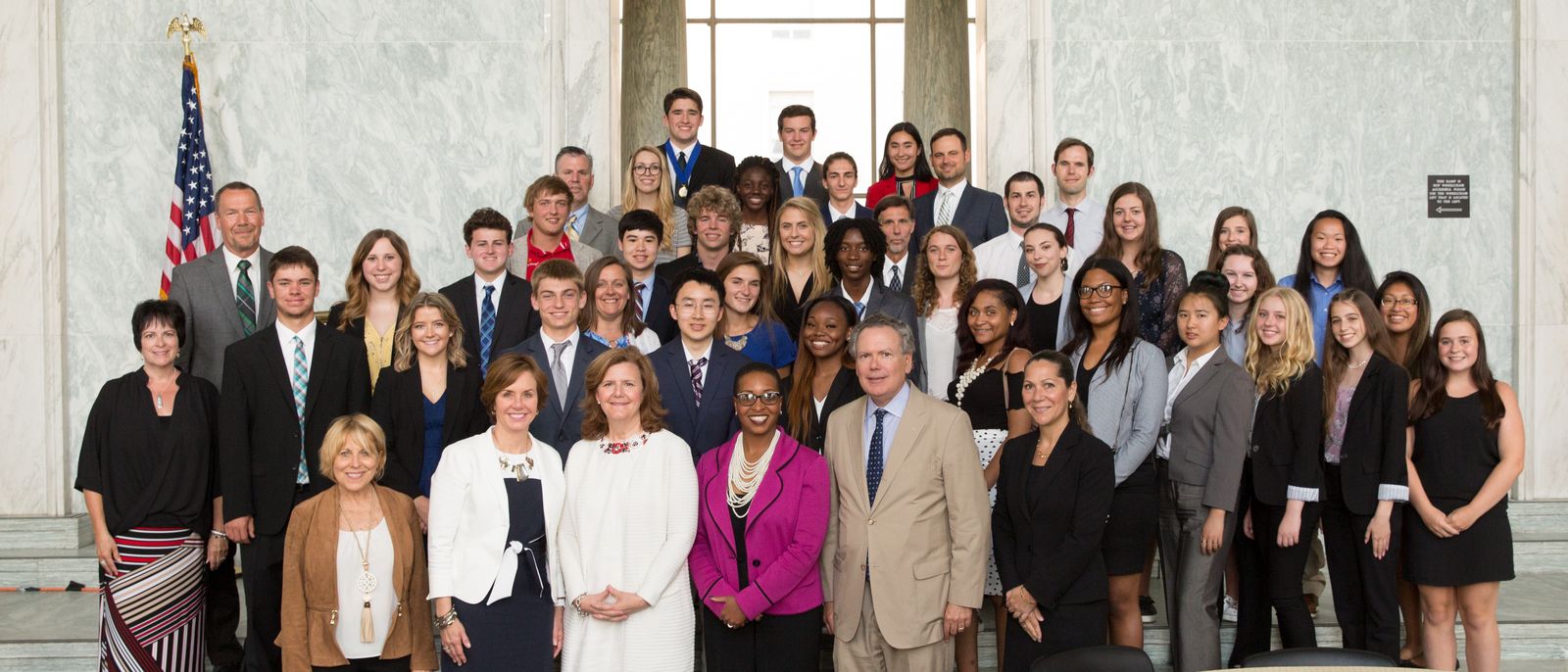
Common questions
Who can participate?
Public middle and high schools, by invitation from the SIFMA Foundation. Priority goes to Title I schools demonstrating the highest need. All schools can use The Stock Market Game, InvestWrite and SMG InvestQuest.
How much does it cost?
The Capitol Hill Challenge is offered free of charge.
How are schools matched with Congress?
By zip code, with their Representative or Senator. Up to two schools are matched with each Member.
How are winners chosen?
By a portfolio's percent return compared with the S&P 500 Growth for the competition period, among teams that follow all rules. Only one team per school and one per Member of Congress can win.
What do winners receive?
The top 10 teams receive awards and national recognition at a June celebration. In recent years this was held at the U.S. Capitol, with visits to Members of Congress and meetings with business, government and education leaders.
Useful links
2027 Rules and Code of Participation
Eligibility, portfolio rules, deadlines and how winners are ranked.
Teacher profile: Ryan Gevaudan
A 2023 Capitol Hill Challenge teacher on running the program.
Teacher profile: Maureen DiPace
A 2023 Capitol Hill Challenge teacher on what students gained.
Charles Schwab Foundation
Presenting sponsor; pledged a three-year, $1.2 million grant in 2024.
Connected programs



Bring the Capitol Hill Challenge to your district
Members of Congress, schools and funders can all help more students take part.